Stop 1 of 4
Porta Fonte
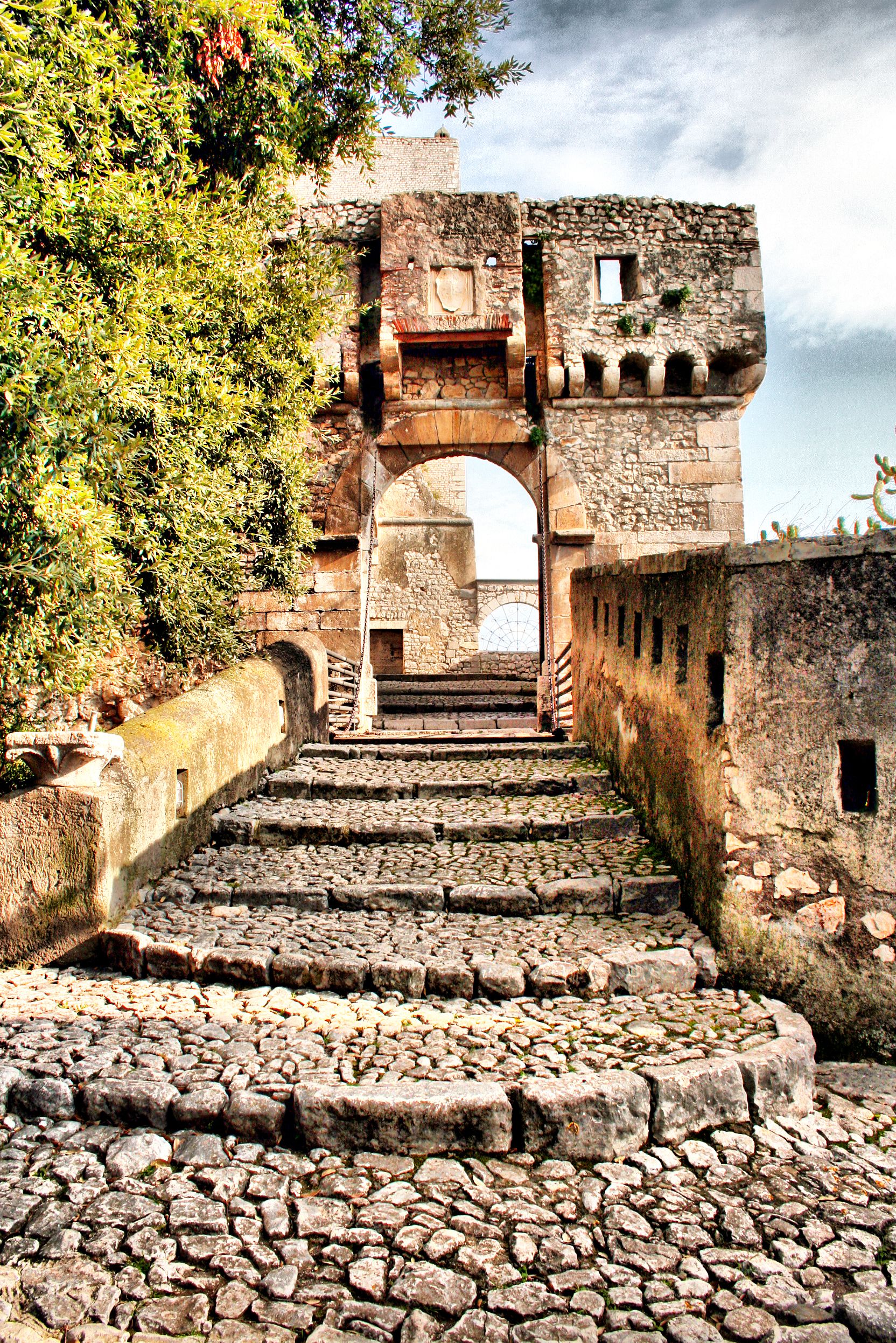
You arrive from the plain and stop at Porta Fonte, the low entrance to the village. The gate takes its name from the spring that stood here, before the road began to climb: you drank, then you went in. The walls close Sermoneta on the side facing the plain, and from this point on you walk on stone, no longer among fields. The climb is short but steep. The town does not show itself all at once: it reveals itself in stretches, between an arch and a flight of steps, as you leave the Agro behind. It is the entrance stop, the moment when the route stops being countryside and becomes a village.
Stop 2 of 4
Village lanes
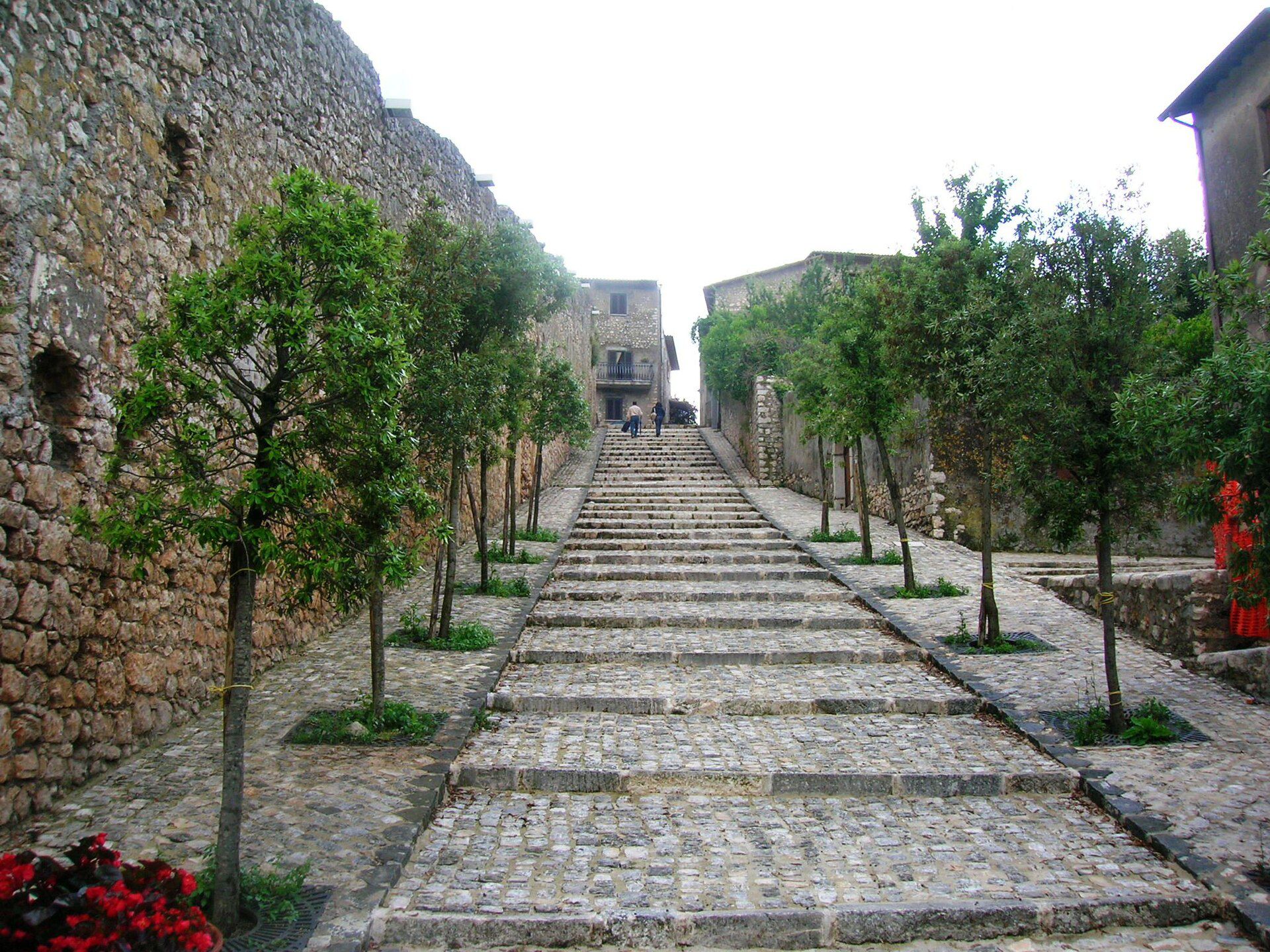
Inside the walls the streets are alleys, and you walk one behind the other. The paving is narrow, the walls high, and at midday the shade stays at the bottom of the street while up above the sun catches only the cornices. Sermoneta is built on the slope of the Monti Lepini, so almost every stretch climbs or drops: steps, bends, covered passages, an arch that forces you to bow your head. The houses lean on one another, with small windows and iron balconies. There is no single axis. You turn, you lose sight of the plain and find it again, all at once, at the end of an alley. This stop is the fabric of the village, the time you lose before the climb closes in on the castle.
Stop 3 of 4
Caetani Castle
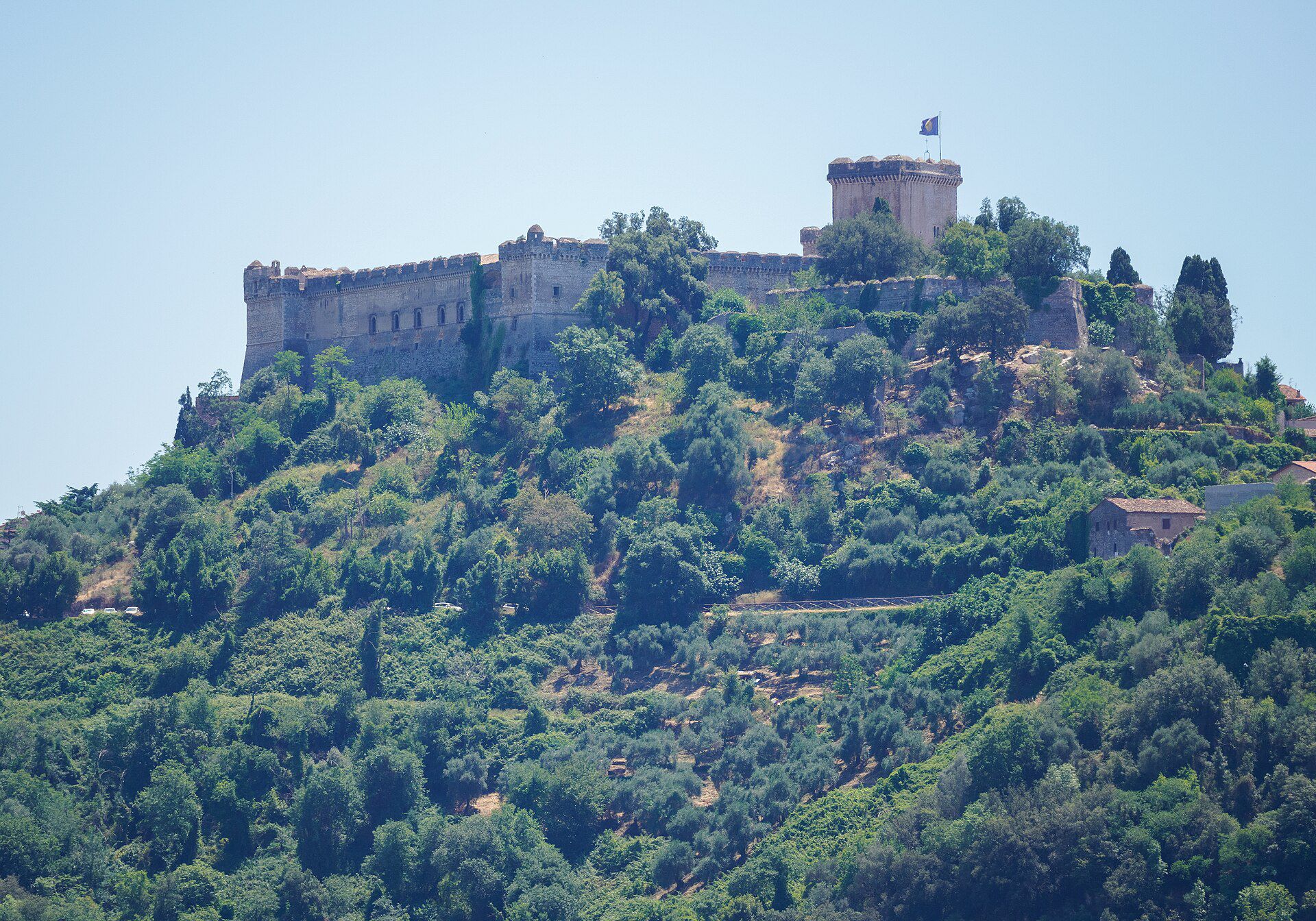
The castle closes the climb and is the reason for the route: you do not pass through it, you stop. It was founded by the Annibaldi at the beginning of the thirteenth century; it then passed to the Caetani, who made it the stronghold over the Pontine plain. When Alexander VI expropriated the family, Lucrezia Borgia lived there; in 1536 Charles V was a guest. Of the oldest core the Maschio and the Maschietto remain, the two towers that still hold the profile. The Borgia, with Antonio da Sangallo, added the citadel and the ring of fortifications that closes the courtyard. Today it is looked after by the Fondazione Roffredo Caetani. You go in, you look at the courtyard, and you understand that the walk through the village was there to bring you here, not to go further.
Stop 4 of 4
View over the plain
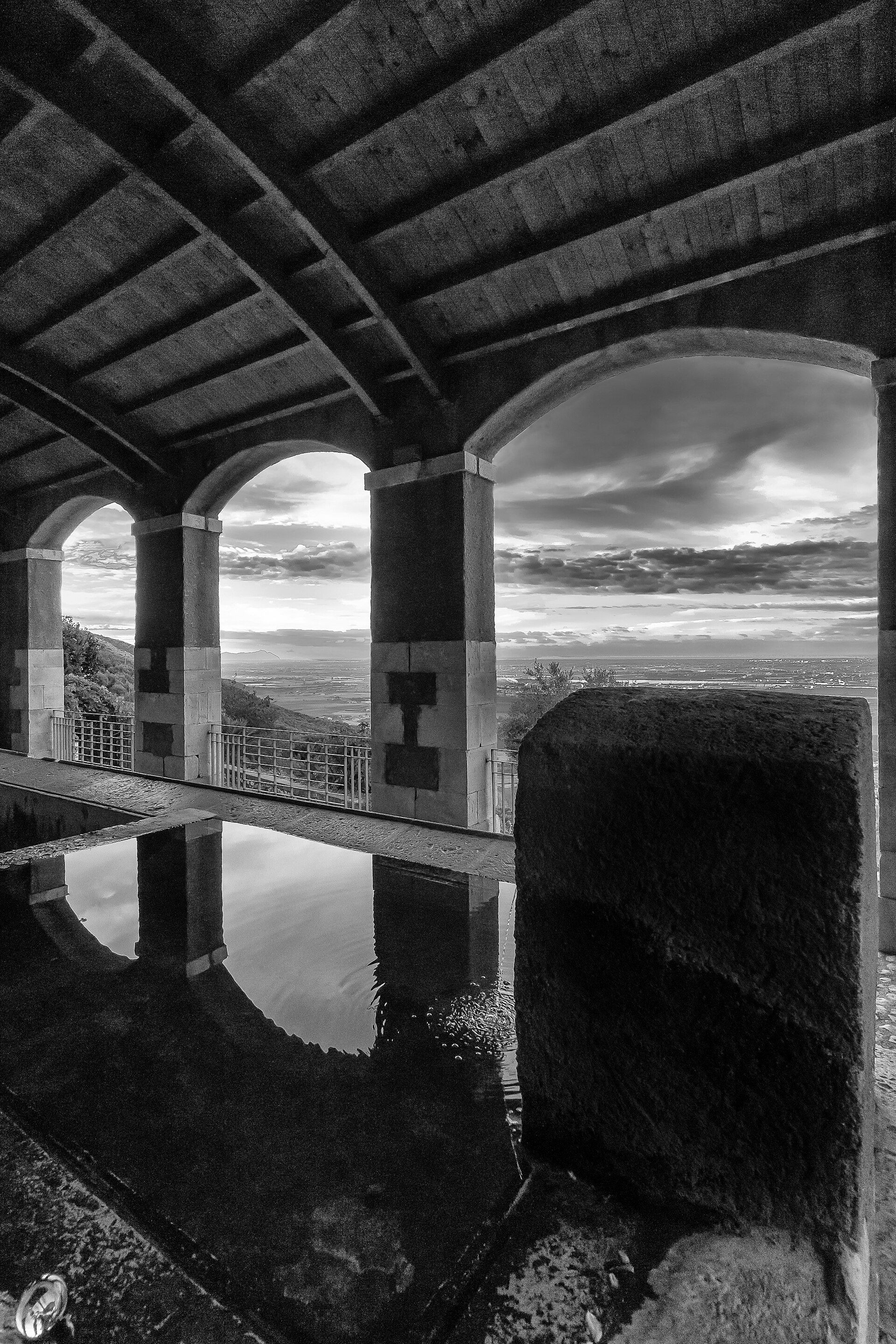
From the belvedere, behind the town hall and at the foot of the stairway that climbs to the castle, the village finally opens up. Until a minute before you had stone above your head; here there is the horizon. Below lies the Agro Pontino, the reclaimed plain, Latina, and on clear days the Tyrrhenian with the Pontine Islands, a bright line at the far end of the valley. The old washhouse, with its arches facing the fields, says the same thing with water: from up here people went down to wash, and came back up. The route ends with the eyes, not with another alley. From this point you understand why the castle stands here. It controlled, and still watches, all the territory left below.